Learning how to sew is exciting—but it can also be frustrating at the beginning.
If your stitches don’t look right, your fabric keeps bunching, or projects don’t turn out as expected, you’re not alone.
Most beginners make the same sewing mistakes, and the good news is: they’re all fixable.
In this guide, you’ll learn the 10 most common sewing mistakes beginners make and exactly how to fix them—so you can sew with confidence and enjoy the process.
1. Not Threading the Sewing Machine Correctly
One of the most common beginner sewing problems is incorrect threading.
Even a small mistake can cause skipped stitches, thread breaks, or messy seams.
How to fix it:
• Always thread the machine with the presser foot up
• Follow the threading path exactly as shown in your manual
• Rethread from scratch if something looks off
👉 Helpful guide:
How to Thread a Sewing Machine (Beginner Step-by-Step Guide)
2. Incorrect Tension Settings
If your stitches look loose, uneven, or puckered, tension is usually the issue.
How to fix it:
• Start with the default tension setting
• Adjust slowly, one number at a time
• Test on scrap fabric before sewing your project
👉 Learn more here:
Sewing Machine Tension Explained (Beginner Guide)
3. Using the Wrong Needle
Different fabrics require different needles. Using the wrong one can damage fabric or cause skipped stitches.
How to fix it:
- Lightweight fabric → universal or sharp needle
- Thick fabric or denim → denim needle
- Knits → ballpoint needle
- Replace needles regularly
4. Skipping Fabric Preparation
Many beginners skip washing and pressing fabric before sewing. This often leads to shrinking, twisting, or uneven seams later.
How to fix it:
- Wash fabric the same way you’ll wash the finished item
- Press fabric flat before cutting
- Align the grain correctly
5. Sewing Too Fast
Speed is tempting—but sewing too fast reduces control and increases mistakes.
How to fix it:
- Slow down, especially around curves and corners
- Use the foot pedal gently
- Focus on control, not speed
6. Ignoring Seam Allowance
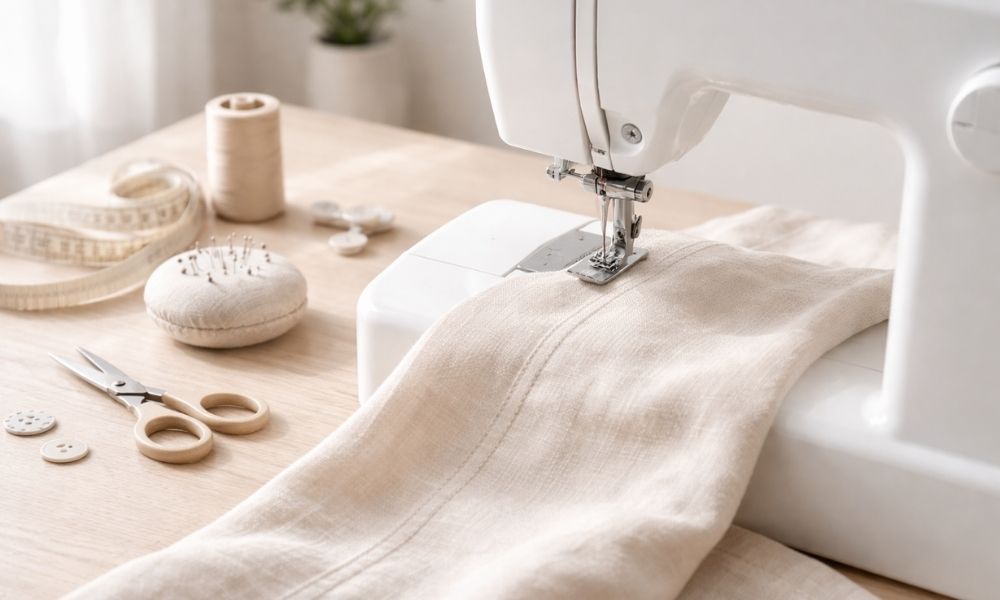
Not paying attention to seam allowance is a very common beginner mistake.
How to fix it:
- Check pattern seam allowance before sewing
- Use seam guides on your machine
- Measure and mark if needed
7. Using Poor Quality Thread
Cheap or old thread breaks easily and creates uneven stitches.
How to fix it:
- Use good-quality polyester or cotton thread
- Avoid dusty, old spools
- Match thread weight to fabric
8. Not Testing on Scrap Fabric
Jumping straight into a project without testing often leads to disappointment.
How to fix it:
- Always test stitch length, tension, and needle on scrap fabric
- Adjust before sewing the final piece
9. Using the Wrong Presser Foot
Many beginners use only the default presser foot, even when another would work better.
How to fix it:
- Zipper foot for zippers
- Walking foot for thick or layered fabrics
- Edge foot for clean topstitching
10. Trying Advanced Projects Too Early
Taking on complex projects too soon can lead to frustration and loss of motivation.
How to fix it:
- Start with simple projects
- Build skills step by step
- Practice techniques before combining them
Want to Avoid These Sewing Mistakes Faster?
Learning through trial and error works—but it can take months.
A structured beginner sewing resource can help you build skills in the right order and avoid the most common mistakes from day one.
Helpful Tip for Beginners
If you’re still struggling with sewing machine tension,
it can be helpful to follow a structured, beginner-friendly explanation.
Some learners prefer step-by-step visual lessons that cover machine setup,
threading, tension adjustment, and common sewing mistakes in one place.
You can explore a helpful sewing resource here if you’d like a deeper walkthrough.
Final Thoughts
Every sewer makes mistakes—especially at the beginning.
The key is learning why they happen and how to fix them quickly.
Take your time, practice often, and enjoy the process. Sewing is a skill that gets better with every project.
Disclosure
This post may contain affiliate links. If you choose to purchase through these links, I may earn a small commission at no extra cost to you. I only recommend resources I genuinely believe are helpful for beginners.